
Akal Wood Fossil Park – A Complete Travel Guide (2026)
Akal Wood Fossil Park is one of the most unusual and underrated destinations in all of Rajasthan. Tucked away just 17 kilometres from Jaisalmer city, this park holds the remains of a prehistoric forest — trees that turned to stone over 180 million years ago, long before the Thar Desert ever existed. If you are curious about what this land looked like in the Jurassic age, Akal Wood Fossil Park gives you a rare, direct answer.x
Most visitors come to the Golden City of Rajasthan for its golden fort and sand dunes. But those who make the detour to this fossil park leave with something far more memorable — the quiet shock of standing next to a tree that was alive when dinosaurs roamed the earth.
What Is Akal Wood Fossil Park?
Akal Wood Fossil Park is a protected geological site managed by the Geological Survey of India. It was formally declared a national geological monument to preserve its extraordinary collection of fossilized wood.
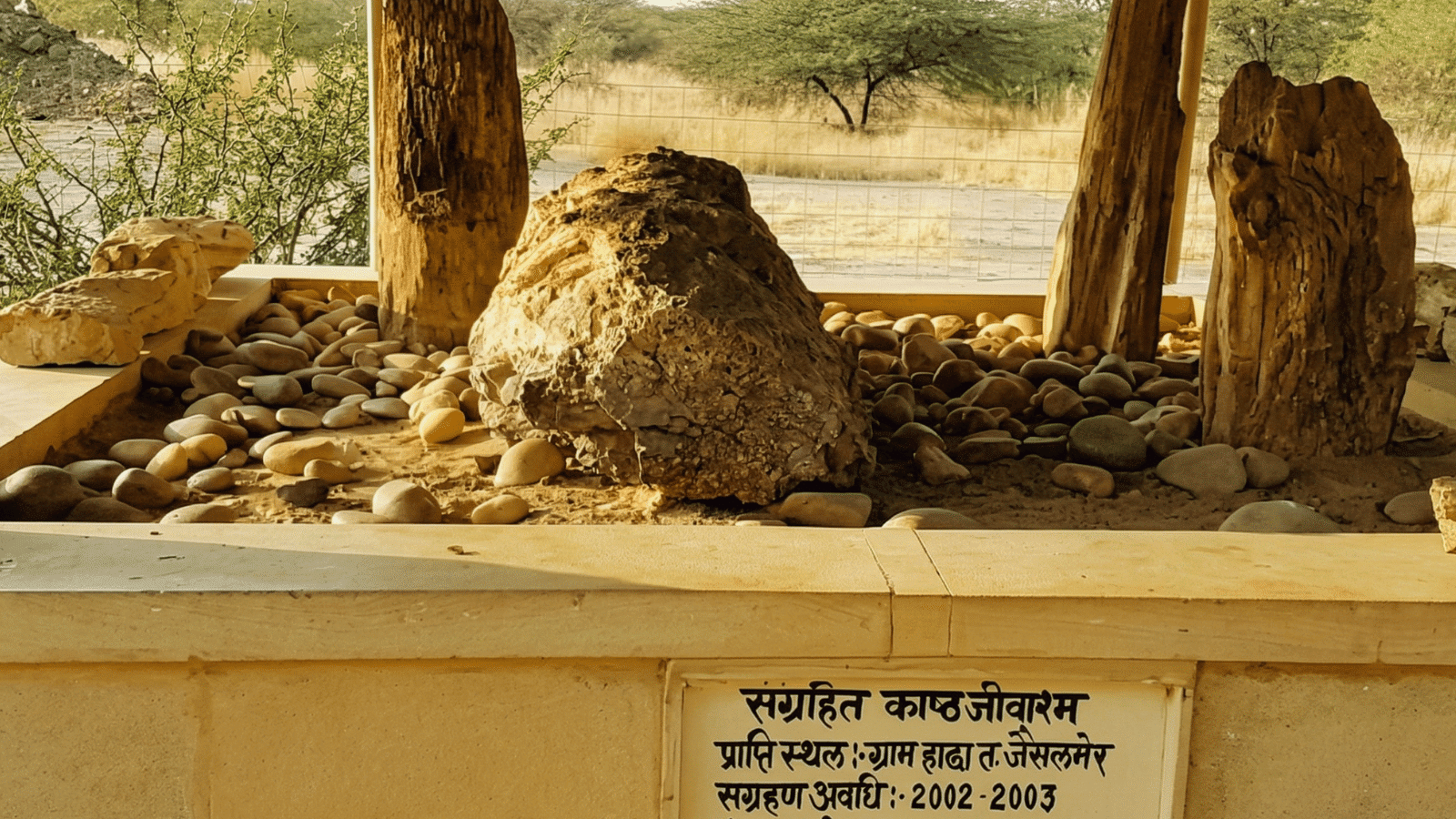
The park contains over 25 fossilized tree trunks, some measuring up to 13 metres in length. These are not replicas or museum exhibits — they are original fossils lying exactly where they were found, embedded in the desert rock and sand.
Key facts about the fossil park:
- Location: Village Akal, 17 km from Jaisalmer on the Barmer highway
- Age of fossils: Approximately 180 million years (Upper Jurassic period)
- Number of fossils: 25+ exposed tree trunk fossils
- Managed by: Geological Survey of India
- Entry fee: ₹5 for Indians, ₹50 for foreign nationals (nominal fees, may vary)
- Timings: 8:00 AM – 5:00 PM, open all days
The Science Behind the Fossils – How Did Trees Turn to Stone?
This is the question every visitor asks. The short answer: a slow chemical process called permineralization.
Millions of years ago, this region was not a desert. It was a lush, tropical forest near a coastline, covered with tall gymnosperms — cone-bearing trees similar to today’s conifers. When these trees fell and were buried under layers of sediment, the organic material was gradually replaced by silica and minerals carried in groundwater. Over millions of years, the wood structure was preserved perfectly in stone form.
What makes akal wood fossil park scientifically remarkable:
- The fossils retain original wood grain, bark texture, and even growth rings
- They help scientists understand the Jurassic vegetation of the Indian subcontinent
- The site proves that the Thar Desert was once a densely forested, humid region
- Several species of fossilized plants have been identified from this single location
What to See Inside Akal Wood Fossil Park
The park is open-air. There are no glass cases or climate-controlled rooms. You walk along a marked trail and encounter the fossils up close, protected by low fencing.
Main highlights:
- Large horizontal trunk fossils — some over 8 metres long, lying as they fell millions of years ago
- Cross-section cuts — some fossils are cut to show interior ring patterns, confirming their age
- Interpretive signboards — placed near each fossil explaining its age and species
- Panoramic desert backdrop — the surreal contrast of ancient stone trees against the Thar landscape
For akal wood fossil park photos, the golden hour (just after sunrise or before sunset) offers the best light. The desert glow on the grey-brown fossils creates images that look almost unreal.
How to Reach Akal Wood Fossil Park from Jaisalmer
Getting here is straightforward. The park sits on the Jaisalmer–Barmer highway (NH-11), making it easy to include in any road trip or day excursion from Jaisalmer city.
Travel options:
- By auto-rickshaw or taxi: Most reliable option. Hire from Jaisalmer city — round trip typically costs ₹300–₹500
- By private vehicle: 20–25 minutes from Jaisalmer city centre
- By bus: Barmer-bound state buses stop near the park; ask the driver in advance
- Bike/scooter rental: Popular among solo travellers; easily rented in Jaisalmer
Best Time to Visit Akal Wood Fossil Park
The fossil park in india that gets the least seasonal attention is actually best visited during cooler months.
Recommended months: October to March
- Temperatures are comfortable (15°C–28°C during the day)
- Early morning visits are peaceful with very few crowds
- The winter light is ideal for photography
Avoid: April to June — temperatures in the Thar Desert can cross 45°C, making an outdoor walk genuinely uncomfortable.
Monsoon (July–September): Light rain improves visibility but check road conditions near the park before visiting.
Akal Wood Fossil Park vs. Other Fossil Sites in India
As a fossil park in india, Akal stands out for one reason: accessibility. Unlike fossil sites locked inside museums or behind long research permits, this park allows you to walk beside the actual specimens in their natural setting.
Comparison with other notable fossil sites:
Feature | Akal Wood Fossil Park | Tiruvakkarai (Tamil Nadu) | Vishwa Shanti Fossil Park (MP) |
Fossil type | Wood/tree trunks | Vertebrate fossils | Mixed |
Open to public | Yes | Limited | Yes |
Entry fee | Very low | Free | Nominal |
Outdoor access | Full open-air | Partial | Partial |
Nearest city | Jaisalmer | Villupuram | Bhopal |
For akal wood fossil park jaisalmer visitors combining it with dune safaris and fort tours, it adds genuine geological depth to what is already a culturally rich trip.
Travel Tips for Visiting Akal Wood Fossil Park
A few practical details that most travel blogs skip:
- Carry water: There are no shops or stalls inside the park. Desert heat is deceptive even in winter.
- Wear closed shoes: The trail is rocky and uneven in sections.
- Hire a guide if possible: Local guides (available at the entrance for a small fee) add context that the signboards alone cannot provide.
- Photography: Permitted freely. No restrictions on personal cameras or phones.
- Time needed: 45 minutes to 1.5 hours is sufficient for a thorough visit.
- Combine with: Many travellers pair this with the Sam Sand Dunes or the Kuldhara ghost village on the same day.
If you are staying in Swiss tents in Jaisalmer, ask your camp host to arrange a morning drop to the fossil park before the dune activity begins — the timings align perfectly.
Akal Wood Fossil Park for Families, Students & Researchers
The site works well for different kinds of visitors:
For families with children:
- Safe, walkable trail with clear signage
- Kids find the massive stone trees genuinely fascinating
- Short enough to hold attention without fatigue
For students and educators:
- Ideal for geology and natural history field trips
- Physical interaction with Jurassic-era specimens unavailable in most classrooms
- Geological Survey information boards provide academic context
For researchers and geology enthusiasts:
- The Geological Survey of India maintains detailed records on each specimen
- Published research on the site is available through GSI publications
- The site continues to be monitored for conservation
Conclusion
Akal Wood Fossil Park is not the loudest attraction in Jaisalmer, Rajasthan. It does not need to be. Its 180-million-year-old fossils speak quietly and carry more weight than most monuments ever could.
Whether you are a first-time visitor to Jaisalmer tourism, a geology enthusiast, a curious traveller, or a parent looking for something truly different — the akal wood fossil park deserves a half-morning of your itinerary. You will not regret the detour.
Plan your visit between October and March, carry water, go early, and give yourself at least an hour. The ancient forest is patient — it has been waiting 180 million years. It can wait for you to arrive.