Rajasthani Folk Dance: Types, History & Cultural Significance
Rajasthani folk dance is one of the most colorful and energetic expressions of India’s cultural heritage. Performed at weddings, festivals, and fairs across the desert state of Rajasthan, these dances carry centuries of tradition, storytelling, and community spirit. Whether you are a traveler, a student of art, or simply curious about the traditional dance of India, this guide covers everything you need to know.
What Is Rajasthani Folk Dance?
Rajasthani folk dance refers to the group of community-based dances that have been passed down through generations in Rajasthan. Unlike classical dance forms that follow strict grammar and rules, folk dances are rooted in everyday life — harvests, love stories, devotion, and celebration.
These dances are not performed on a stage for a select audience. They happen in open courtyards, village squares, and under the open sky of the Thar Desert. The energy is raw, the costumes are brilliant, and the music is deeply moving.
Key characteristics of Rajasthani folk dance:
- Community-driven — performed by groups, not solo artists
- Occasion-based — tied to festivals, weddings, and seasonal events
- Costume-rich — bright lehengas, heavy jewelry, and ghungroos (ankle bells)
- Accompanied by folk songs — Rajasthani folk songs are inseparable from the dance
- Passed down orally — no written curriculum; learned by watching and doing
Top Folk Dances of Rajasthan You Should Know
1. Ghoomar Dance
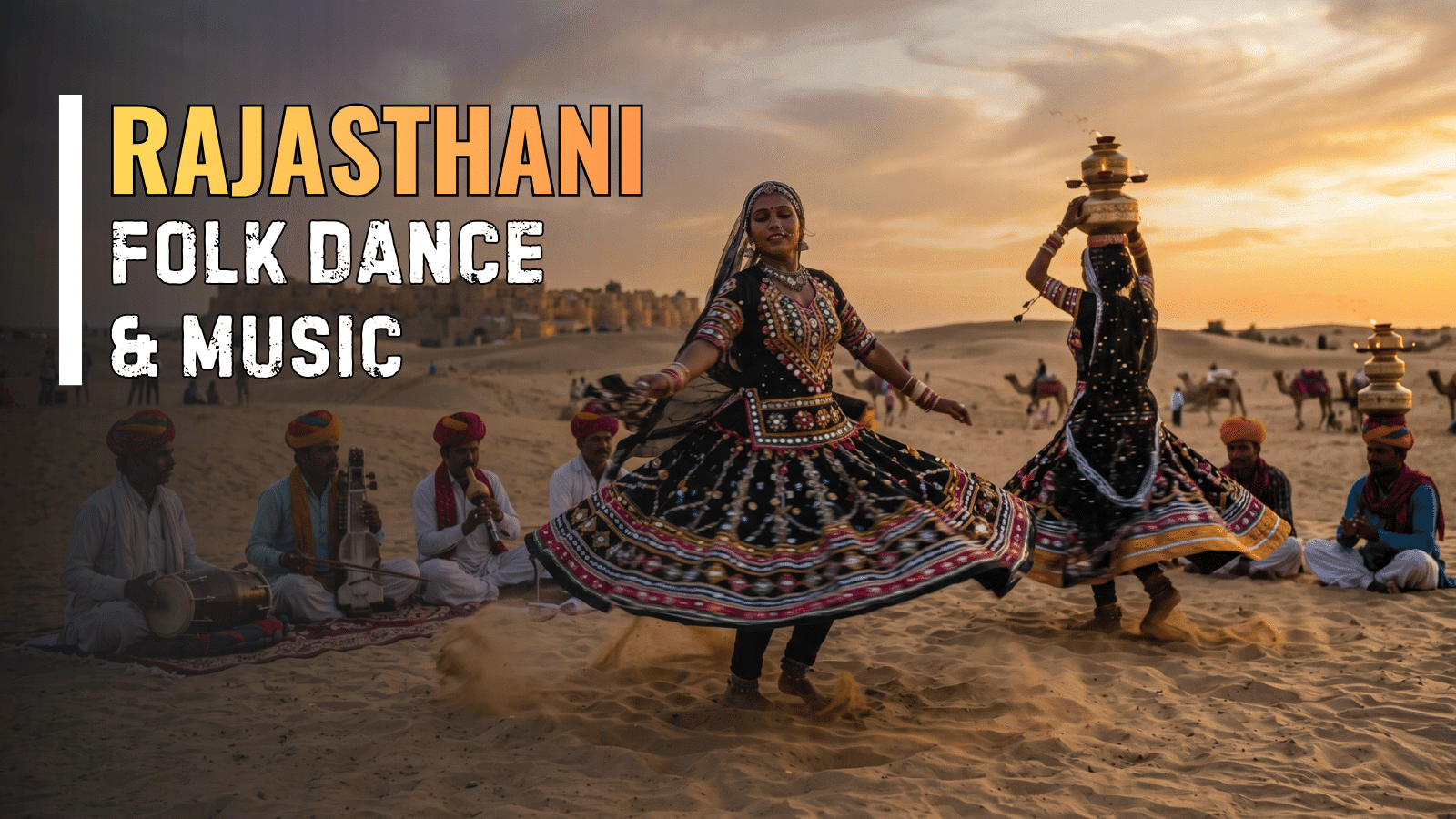
Ghoomar is the most iconic Rajasthani folk dance and is considered the state dance of Rajasthan. Performed by women, it features graceful twirling movements where the colorful ghaghra (skirt) fans out like a spinning flower. The word “Ghoomar” itself comes from “ghoomna,” meaning to spin.
Originally performed by the Bhil tribe and later adopted by Rajput women, Ghoomar is danced during weddings and auspicious occasions. If you are visiting Jaisalmer, a Full Day Jaisalmer City Tour almost always includes a live Ghoomar performance at a heritage venue.
- Dancer twirls continuously while moving in a circle
- Movements include clapping, hand gestures, and footwork
- Typically performed in groups
- Traditional costume: long flared skirt, odhni (dupatta), and heavy silver jewelry
2. Kalbeliya Dance
Kalbeliya is a UNESCO-recognized folk dance performed by the Kalbeliya community — a group historically known as snake charmers. The dance mimics the movements of a serpent, with fluid, hypnotic body movements and acrobatic spins.
The Kalbeliya dance and its folk songs were inscribed on UNESCO’s Intangible Cultural Heritage list in 2010, making it one of the most recognized folk dances of India internationally.
- Performed by women in black costumes with embroidered patterns
- Music played on the “been” (pungi) — a wind instrument
- Dance includes floor work, bends, and fast spinning
- Often performed at the Pushkar Camel Fair and other major Fairs of Rajasthan
- Watching a Kalbeliya performance at a Sam Sand Dunes Camp under the open desert sky is considered one of the most memorable cultural experiences in Rajasthan
3. Chari Dance
Chari dance is unique to the Kishangarh area of Ajmer district and is performed by women of the Gujjar community. Women balance brass pots (charis) on their heads, often lit with flames, while dancing gracefully.
- Performed to celebrate the birth of a son or other auspicious events
- Requires balance, precision, and years of practice
- The lit pots create a dramatic visual effect at night performances
- Music is based on traditional Rajasthani folk songs
4. Bhavai Dance
Bhavai is one of the most acrobatic Rajasthani folk dances. Dancers balance multiple clay pots or brass pots on their heads — sometimes as many as eight or nine — while dancing on the sharp edges of a sword or glass.
- Performed by the Bhavai community of Rajasthan
- Combines dance with extraordinary balancing feats
- Costumes: bright ghaghra, mirror-work blouse, and heavy ornaments
- Expresses strength, beauty, and feminine grace simultaneously
5. Terah Taali Dance
Terah Taali literally means “thirteen cymbals.” In this dance, women tie 13 small cymbals (manjeeras) to their bodies — on knees, wrists, arms, and around the waist — and strike them rhythmically while seated on the floor. The dance is a devotional offering to Baba Ramdev, a folk deity of Rajasthan.
- Performed only by women of the Kamadia tribe
- Dancers remain seated throughout the performance
- Requires perfect coordination between all 13 cymbals
- One of the most meditative and devotional forms of folk dance of Rajasthan
6. Kathputli Dance
While technically a puppetry tradition, the Kathputli performers of Rajasthan also include live dance sequences. Kathputli (string puppet) shows are one of the oldest performing art traditions in the world, originating in Rajasthan over 1,000 years ago.
- Performed by the Bhat community of Rajasthan
- Puppets are made from wood, cloth, and strings
- Live music and narration accompany the show
- Stories are drawn from history, mythology, and humor
The Cultural Importance of Rajasthani Folk Dance
Rajasthani folk dance is not just entertainment. It is a living document of history, social values, and community bonds. Here is why it matters:
Social bonding: These dances bring communities together at festivals and life events. They are performed collectively and create a sense of shared identity.
Storytelling: Many dances narrate stories of Rajput bravery, love, devotion to gods, or seasonal abundance. They preserve history without books.
Religious expression: Several dances like Terah Taali are acts of worship. Dance is considered a form of offering to the divine.
Women’s expression: Historically, many Rajasthani folk dances gave women a space to express joy, strength, and creativity within their communities.
Tourism: Today, Rajasthani folk dance is a major attraction for cultural tourism. Visitors to Jaisalmer, Jodhpur, and Jaipur often witness live performances.
Rajasthani Folk Dance and Music – An Inseparable Bond
You cannot separate Rajasthani folk dance from Rajasthani folk song. The music drives the energy of the dance. Traditional instruments that accompany these dances include:
- Dholak — a double-headed drum central to most performances
- Sarangi — a bowed string instrument that adds melody
- Morchang — a jaw harp used for rhythmic texture
- Been (Pungi) — the wind instrument associated with Kalbeliya dance
- Algoza — a twin flute played simultaneously by one musician
- Nagara — large kettle drums played for Ghoomar and royal dances
The songs sung during these dances often describe the beauty of Rajasthan’s landscape, longing, devotion, or valor. The Rajasthani folk song tradition is as deep and rich as the dance itself.
Best Places to Experience Rajasthani Folk Dance
If you want to witness authentic Rajasthani folk dance performances, these are the best places and experiences:
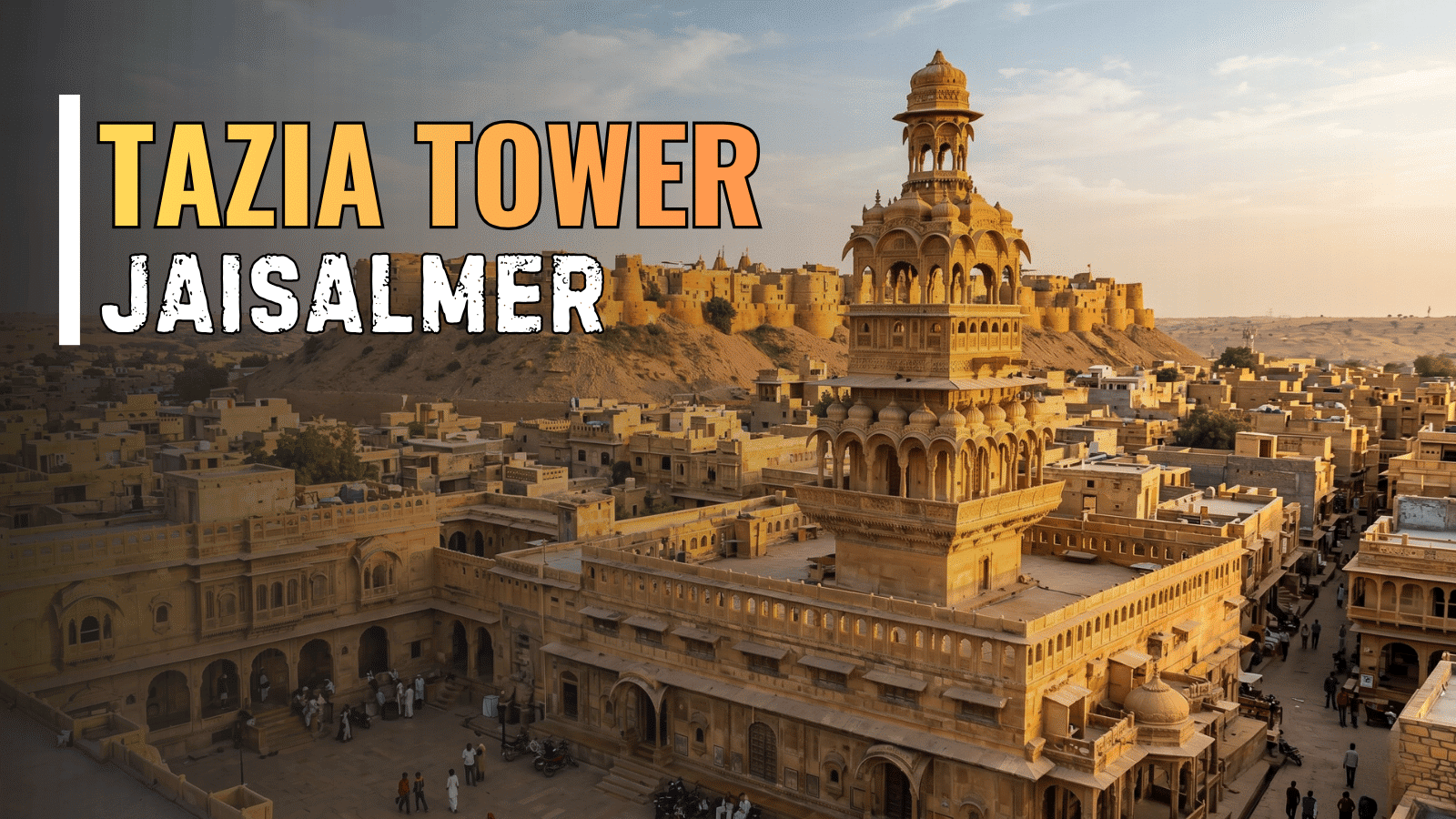
Jaisalmer is the golden city where cultural performances are deeply embedded in the tourist experience. The city’s havelis, forts, and open-air venues host Ghoomar, Kalbeliya, and Terah Taali performances almost every evening for visitors.
Sam Sand Dunes outside Jaisalmer offer one of the most magical settings for folk dance. Under the desert sky, with the dunes as a backdrop, the performances take on a different energy altogether — fire, music, and movement blending into one unforgettable experience.
For those planning an overnight desert stay, luxury and heritage camps near Jaisalmer typically include a full cultural evening with folk performances, bonfire, and camel ride — a complete Rajasthani experience from start to finish.
Other important places to experience folk dance:
- Jaipur — at Chokhi Dhani resort and Jawahar Kala Kendra
- Jodhpur — during Marwar Festival (October)
- Pushkar — during the Pushkar Camel Fair (November)
- Udaipur — at Bagore ki Haveli cultural shows every evening
Rajasthani Folk Dance vs Classical Dance: Key Differences
Many people confuse folk dance with classical dance. Here is a simple comparison:
| Feature | Rajasthani Folk Dance | Classical Dance |
| Origin | Villages and tribal communities | Royal courts and temples |
| Rules | Flexible, community-based | Strict grammar and technique |
| Performers | Community members, not trained professionals | Trained artists with formal education |
| Purpose | Celebration, devotion, storytelling | Artistic presentation and spiritual expression |
| Costumes | Bright, local textiles and tribal jewelry | Elaborate classical costumes |
| Examples | Ghoomar, Kalbeliya, Terah Taali | Kathak, Bharatanatyam, Odissi |
Classical dance forms like Kathak do have roots in Rajasthan (especially Jaipur Gharana Kathak), but they evolved separately from folk traditions.
Conclusion
Rajasthani folk dance is a living, breathing treasure of India’s cultural heritage. From the spinning grace of Ghoomar to the serpentine movements of Kalbeliya, from the cymbal-coordination of Terah Taali to the balancing acts of Bhavai — each dance form tells a story that words alone cannot. These dances survived centuries not because they were preserved in museums, but because communities kept performing them with pride and joy.
If you ever visit Rajasthan, do not miss the chance to witness these performances. A Jaisalmer tent booking at a desert camp gives you an evening of live folk dance, music, and bonfire under a star-filled sky – an experience that stays with you long after you leave.