Tazia Tower Jaisalmer – History, Entry Fee, Timings & Complete Travel Guide
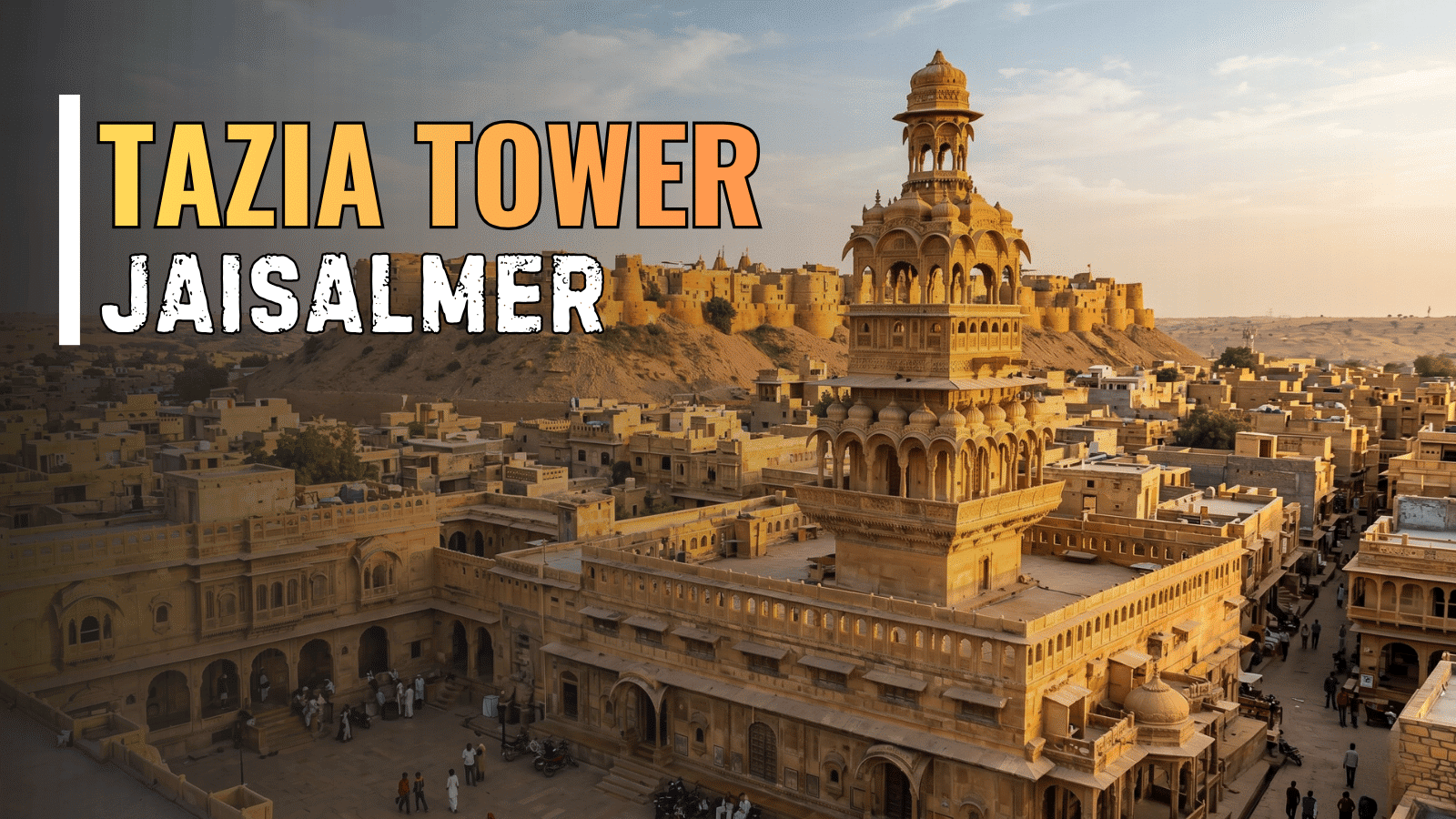
Tazia Tower Jaisalmer is one of the most overlooked heritage structures in all of Rajasthan. Sitting quietly inside the Badal Vilas Palace within Jaisalmer Fort, this intricately carved wooden tower was built by Muslim craftsmen who served the Hindu Bhati Rajput rulers – and it has stood there for centuries as a silent symbol of two communities sharing one royal court. Most tourists walk right past it. Those who stop and look up rarely forget what they see.
If you are building a Jaisalmer itinerary and want to go beyond the usual sand dunes and camel rides, Tazia Tower deserves a dedicated slot in your plan. This guide covers everything – history, timings, how to reach, what to expect, and how to combine it with the best of Jaisalmer.
What Is Tazia Tower and Why Does It Exist?
A tazia is a decorative replica of Imam Hussain’s tomb at Karbala, traditionally made during the Islamic month of Muharram. Muslim artisans who lived and worked inside Jaisalmer Fort built one every year for the procession. Over time, one permanent version was preserved inside the Badal Vilas section of the royal palace – and that is what you see today.
What makes this remarkable is the setting. This is not a mosque or a Muslim-owned space. It sits inside a Hindu king’s palace, preserved by Rajput rulers who saw it as part of their court’s identity. That is the real story of Tazia Tower – not just architecture, but a relationship between communities that existed for generations.
Key facts about Tazia Tower:
- Located inside Badal Vilas Palace, Jaisalmer Fort
- Built entirely from carved wood – no stone, no metal structure
- Stands approximately 5 storeys high with detailed jali (lattice) work
- Created by Muslim karigar (craftsmen) families who served the Maharawal’s court
- One of the very few permanent tazia structures in India
- Represents centuries of Hindu-Muslim coexistence in Rajputana
Where Exactly Is Tazia Tower Located?
Tazia Tower is inside Jaisalmer Fort – specifically within the Badal Vilas Palace complex, near the Raj Mahal (Royal Palace). The fort itself sits on Trikuta Hill in the center of Jaisalmer city.
Once you enter the fort through the main Gopa Chowk gate, you will need to walk through the winding lanes toward the palace section. Look for signs pointing to Badal Vilas or ask any local — everyone inside the fort knows it.
The entire fort area is walkable, but the lanes are narrow and the paths are uneven. Wear flat, comfortable shoes.
Tazia Tower Entry Fee and Timings
- Timings: 9:00 AM to 5:00 PM (confirm locally before visiting as hours may vary by season)
- Entry Fee: Covered under the Badal Vilas Palace / Jaisalmer Fort combined ticket
- Approximate ticket price: ₹100–₹150 for Indian visitors, ₹250–₹350 for foreign tourists
- Photography: Permitted inside (no extra fee in most cases)
- Best visiting time: 9 AM to 11 AM — fewer crowds, soft morning light, cooler temperature
Hiring a local guide at the fort entrance is worth ₹150–₹300. Without one, the wooden tower looks beautiful but you will not understand its full story.
How to Reach Tazia Tower Jaisalmer
By Air
Jaisalmer Airport connects to Delhi, Jaipur, and Mumbai. From the airport, the fort is roughly 10–12 km. A prepaid cab or auto is available right outside.
By Train
Jaisalmer Railway Station is well connected to Jodhpur (5–6 hours), Jaipur, and Delhi. The fort is about 2 km from the station – a short cab or auto ride away.
By Road
NH-11 connects Jaisalmer to Jodhpur and the rest of Rajasthan. Buses run regularly from Jodhpur, Bikaner, and Barmer. If you are travelling by private vehicle, park near Gopa Chowk and walk up into the fort.
Best Time to Visit in Jaisalmer
The best time to visit Jaisalmer is from October to March. The desert heat drops significantly during these months, and the days are bright, dry, and comfortable for walking through forts and havelis.
Here is a practical month-by-month breakdown:
- October – November: Post-monsoon clarity, cool mornings, ideal for outdoor sightseeing and photography
- December – January: Peak season, cold nights, Jaisalmer Desert Festival usually held in late January or early February — the best time for a full cultural experience
- February – March: Mild weather, fewer peak-season crowds, great visibility at the dunes
- April – June: Temperatures cross 45°C regularly — not recommended for outdoor exploration
- July – September: Monsoon season, some roads can get cut off, but hotel rates are low and the desert briefly turns green
If your plan includes visiting Tazia Tower and doing a desert camp stay, aim for November to February. The evenings are cold enough to enjoy a bonfire and the days are perfect for fort walks.
Jaisalmer Itinerary – Fitting Tazia Tower Into Your Trip
A 2- to 3-day Jaisalmer itinerary package. Here is a plan that includes Tazia Tower without rushing anything:
Day 1 – Jaisalmer Fort and Tazia Tower
- Morning: Reach Jaisalmer, check in, have breakfast
- 9:00 AM: Enter Jaisalmer Fort via Gopa Chowk
- 9:30–12:00: Visit Raj Mahal, Jain Temples inside the fort, and Tazia Tower at Badal Vilas Palace
- Afternoon: Lunch inside the fort at a rooftop café
- Evening: Walk the fort market, buy local crafts, watch the sunset from the fort walls
Day 2 – Havelis, Gadisar Lake, and Desert
- Morning: Patwon Ki Haveli and Nathmal Ki Haveli — the finest carved stone mansions in Jaisalmer
- Midday: Gadisar Lake — quiet, beautiful, great for early morning birdwatching too
- Afternoon: Drive to Sam Sand Dunes (45 km from city)
- Evening onwards: Camel safari, cultural folk show, dinner under open sky, overnight stay at JCR Desert Safari Camp
Day 3 – Kuldhara and Optional Tanot Visit
- Morning: Kuldhara — an abandoned village with a haunting history dating to the 1800s
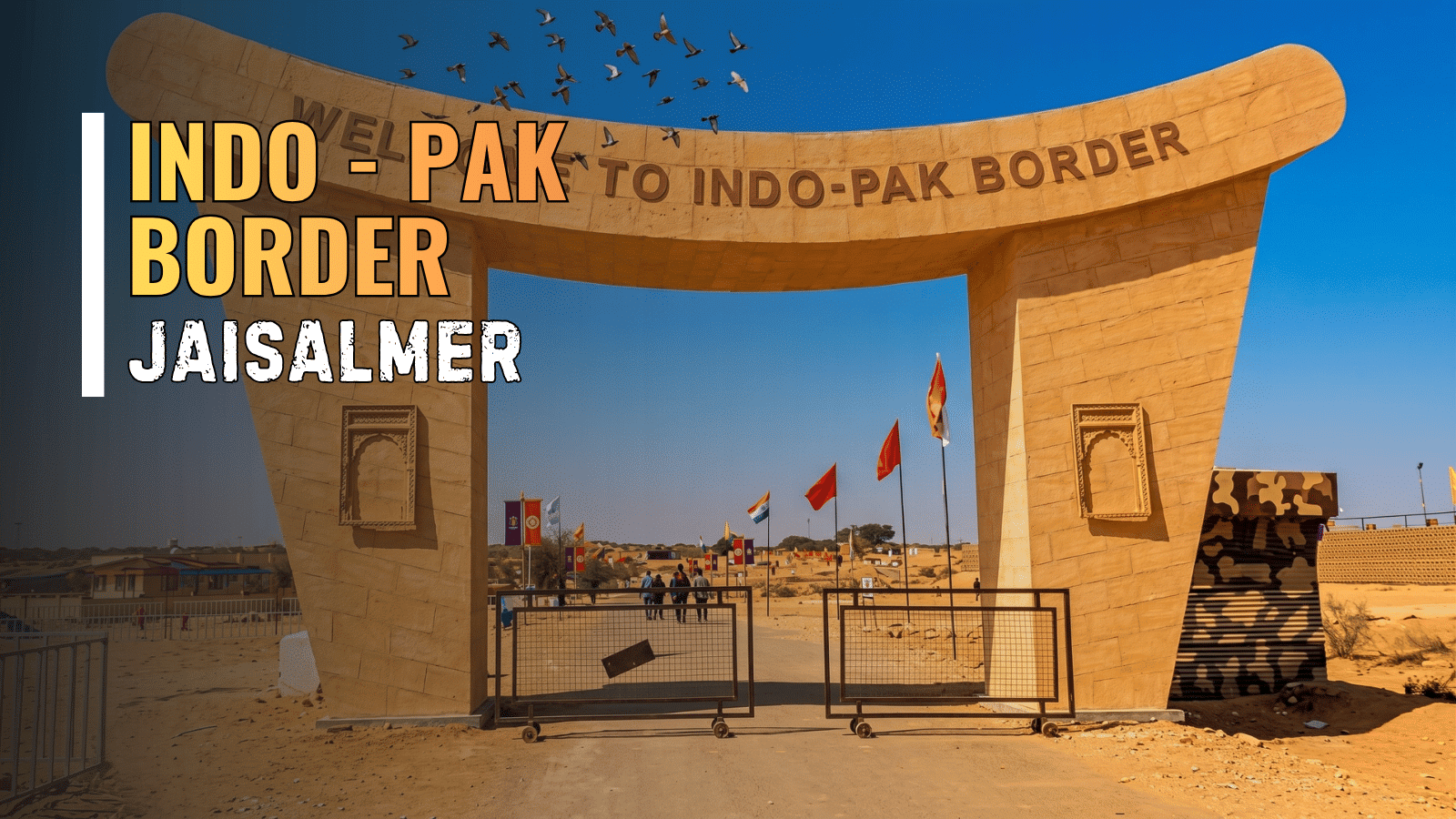
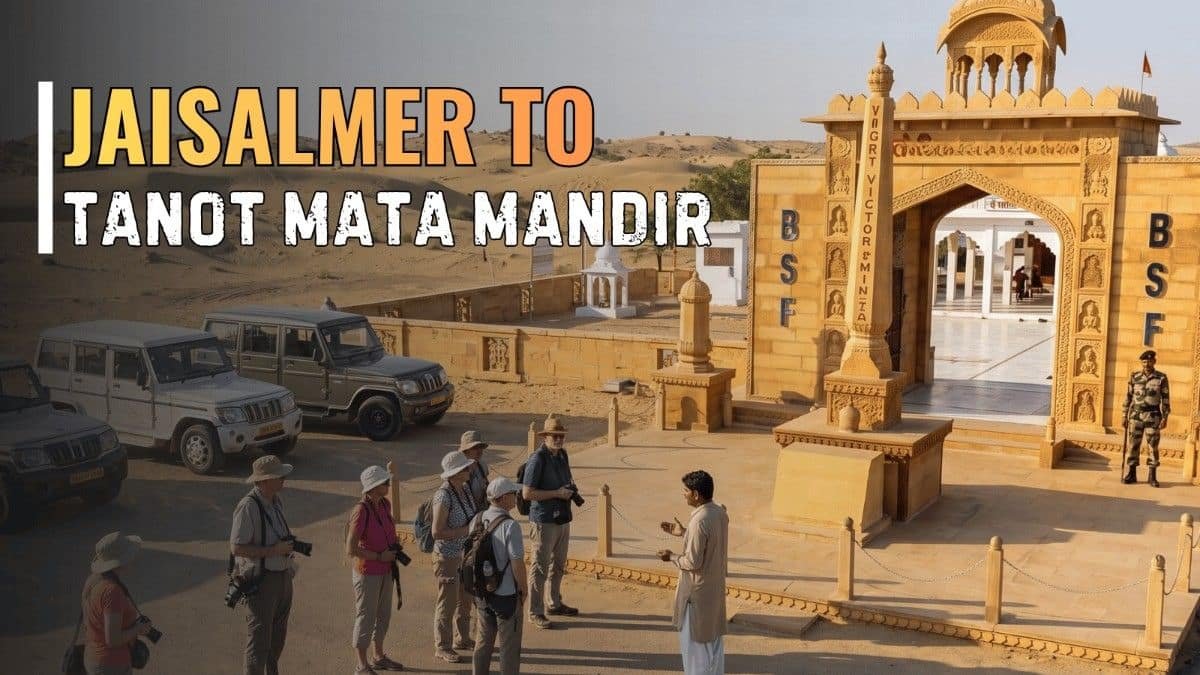
- Late morning (optional): Tanot Mata Temple near the India-Pakistan border — a powerful and unusual experience
- Afternoon: Return, shop for mirror-work textiles and wooden crafts, depart
Cab Service in Jaisalmer – Getting Around Without Hassle
Jaisalmer’s top attractions are scattered across a wide area. Sam Sand Dunes is 45 km out, Kuldhara is 20 km, and Tanot is nearly 120 km from the city. A reliable cab service in Jaisalmer is the most practical way to cover everything without depending on uncertain shared transport.
What to check when booking a cab in Jaisalmer:
- Local drivers who know the desert roads, including unpaved routes to some areas
- AC vehicles — essential from February onwards and a must in summer
- Full-day packages that cover multiple stops without per-kilometer billing
- Clear pickup from your hotel, railway station, or airport
- Night transfer availability for early-morning trains or late arrivals
Approximate cab fares (these vary — always confirm before booking):
- Station or airport to hotel: ₹200–₹400
- Half-day city sightseeing: ₹600–₹800
- Full-day city tour: ₹900–₹1,200
- City to Sam Sand Dunes and back: ₹600–₹900
- Kuldhara + Tanot full-day trip: ₹1,500–₹2,200
Book through your hotel for convenience, or ask for recommendations from other travellers at the fort — word of mouth works well in Jaisalmer.
Other Attractions to See Near Tazia Tower
Once you finish Tazia Tower, there is plenty more within and around the fort:
- Raj Mahal (Royal Palace): Right next door — multi-storey palace with carved balconies and a small museum
- Jain Temples inside the Fort: Built between the 12th and 15th centuries, with exceptionally detailed white marble and sandstone carvings
- Patwon Ki Haveli: The largest haveli in Jaisalmer — five connected mansions with hundreds of carved alcoves
- Gadisar Lake: A historic rain-fed reservoir surrounded by small temples and ghats, 10 minutes from the fort
- Sam Sand Dunes: The main desert attraction — best at sunset, ideal for camel rides and photography
- Kuldhara: An abandoned Paliwal Brahmin village, believed to have been deserted overnight in the early 1800s
JCR Desert Safari Camp – End Your Jaisalmer Trip the Right Way
No trip to Jaisalmer feels complete without at least one night in the desert. JCR Desert Safari Camp near Sam Sand Dunes is one of the best-regarded camps in the area — combining comfort, culture, and the raw beauty of the Thar.
What the camp includes:
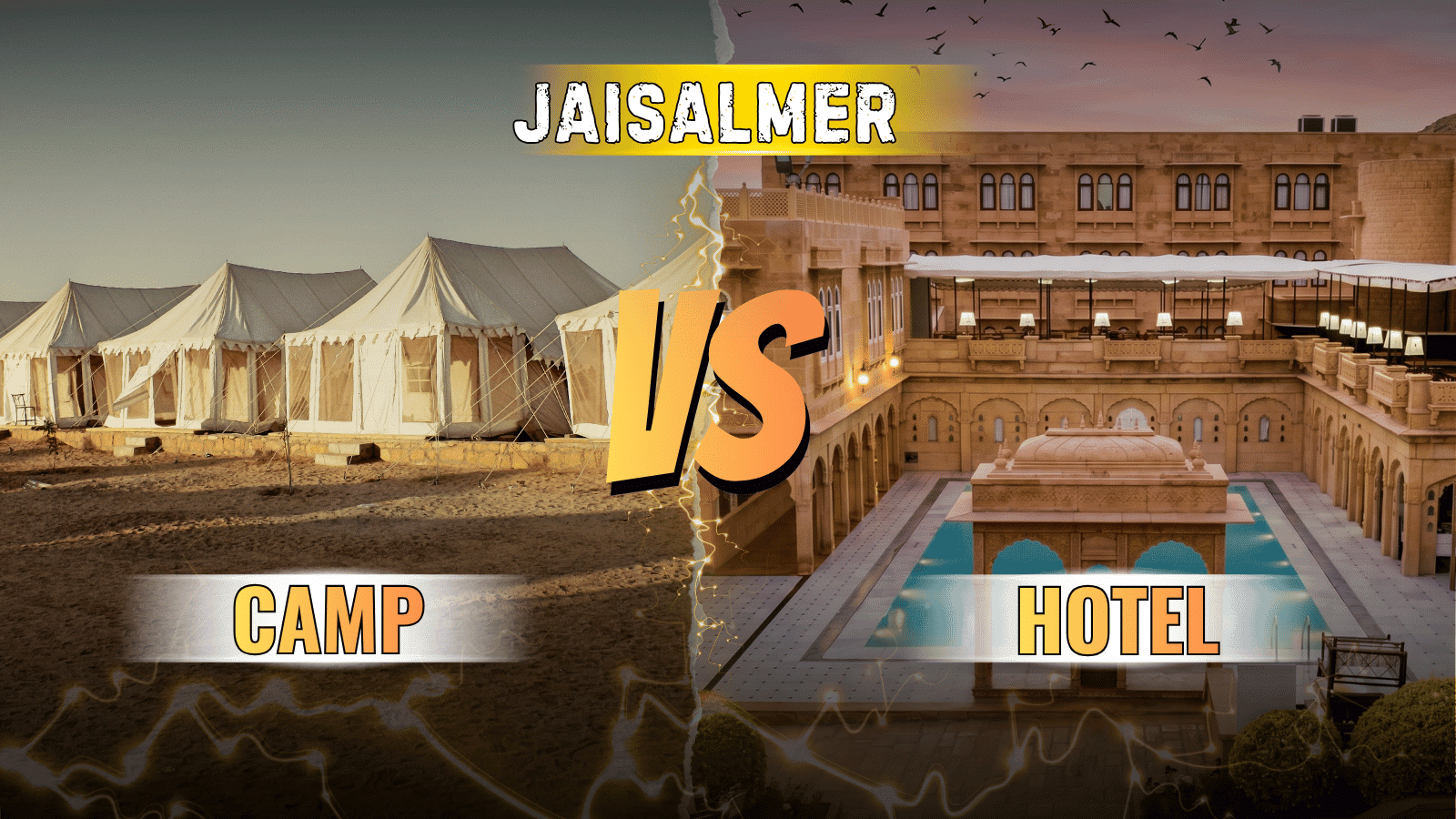
- Swiss tents and deluxe tents with attached washrooms
- Camel safari across the dunes at golden hour
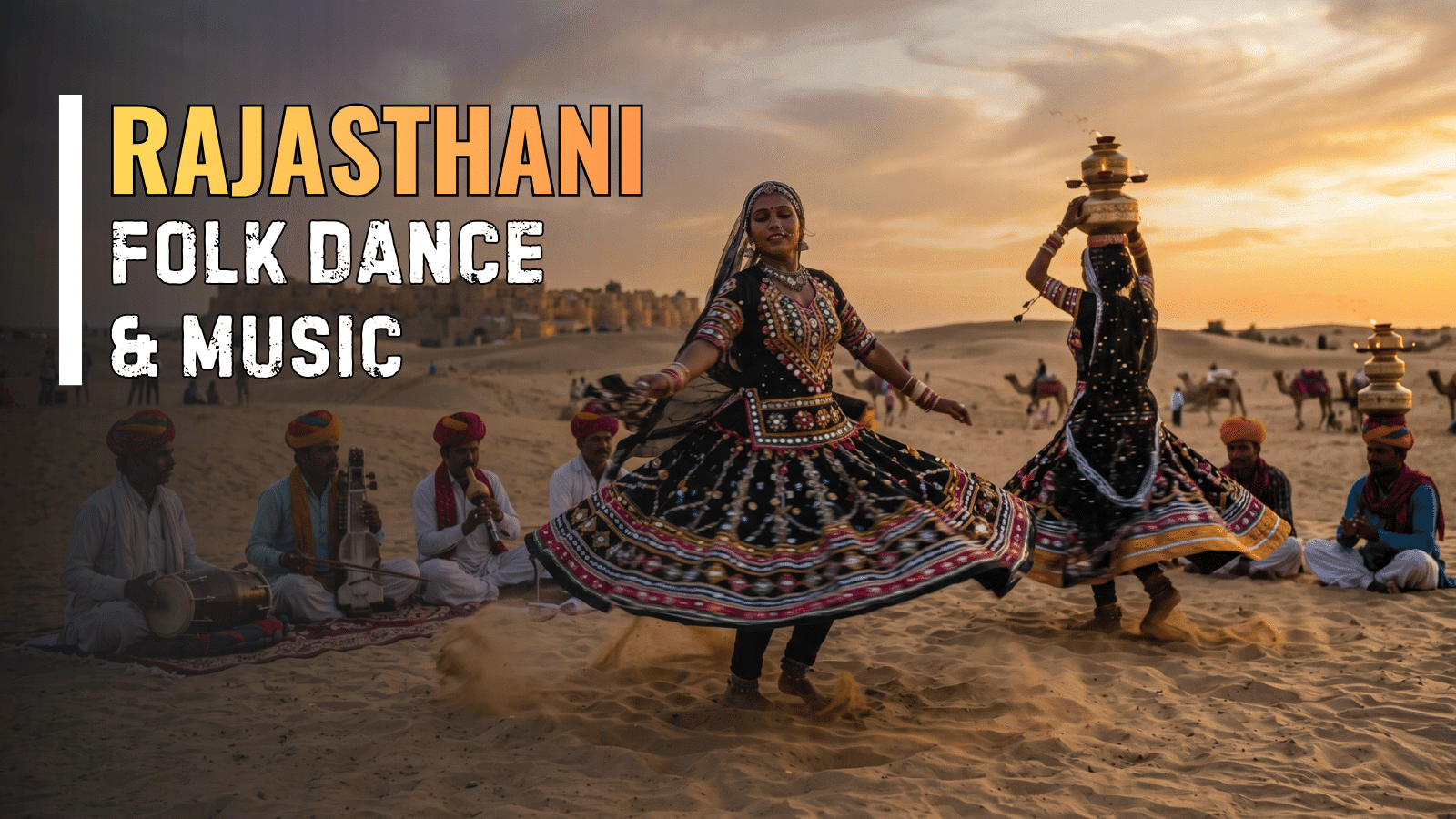
- Live Rajasthani folk music and traditional dance performances
- Bonfire dinner with dal baati churma and other local dishes
- Jeep safari option for those who prefer speed over the gentle sway of a camel
- Stargazing in complete darkness – Sam Dunes has almost zero light pollution
- Pickup and drop from Jaisalmer city on request
JCR Desert Safari Camp brings together everything that makes the Jaisalmer experience memorable — the culture, the silence of the desert at night, the warmth of the fire, and food that actually tastes like Rajasthan. If you are visiting between October and February, book at least 2–3 weeks in advance. Camps fill up fast during the Desert Festival and New Year.
Practical Tips Before You Go
- Carry enough cash – ATMs inside the fort area are limited and sometimes unreliable
- Wear covered shoes with grip – fort lanes are cobblestone and can be slippery
- Carry a water bottle – especially between February and May
- Visit Tazia Tower early (9–11 AM) before tour groups arrive
- Respect the site – this is a living fort with actual residents
- Do not skip the local guide at the fort – ₹200 – ₹300 well spent
Conclusion
Tazia Tower Jaisalmer is the kind of place that does not shout for attention. It sits inside a centuries-old palace, carved in wood, built by hands that believed their craft was worth preserving – and somehow, it still stands. For travellers who care about the real story behind a destination, it is one of the most meaningful stops in all of Rajasthan.